


Absorption vs Rewet: Why Some Diapers Feel Dry (And Others Don’t)
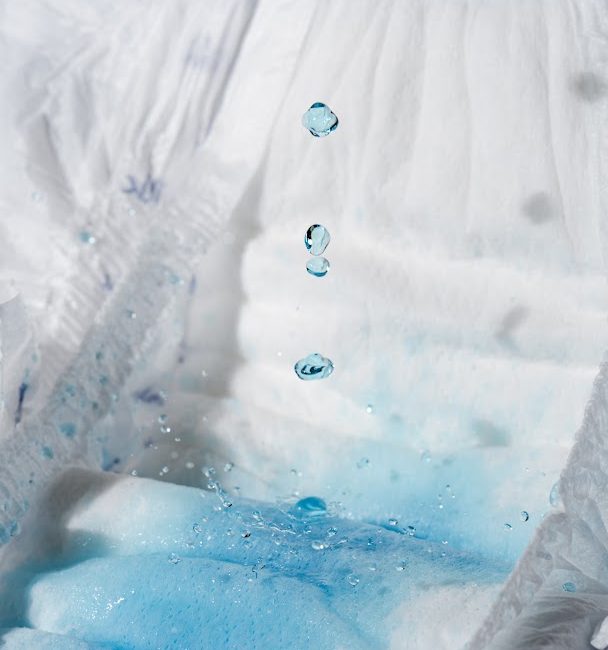
Your baby has just peed and the diaper looks fine. But is it actually keeping your baby’s skin dry? That depends on two things: how fast the diaper absorbs, and how well it holds on to the liquid afterwards.
How Does a Diaper Work?
A diaper does three jobs. The soft top layer lets liquid pass through. The core underneath absorbs it and holds it in. The outer layer stops leaks. The core is the most important part, and it relies on tiny granules called superabsorbent polymer (SAP) that swell as they take in liquid and trap it inside.
Absorption and Rewet: Two Sides of the Same Job
Fast absorption is one of the most important things in a good diaper. The quicker liquid is pulled away from the skin, the better. But absorbing liquid is not the same as keeping it. That’s where rewet comes in.
What Is Diaper Rewet?
Rewet is how much liquid comes back to the surface of a diaper, and onto your baby’s skin, when it’s pressed. This can happen when your baby sits, lies down or is picked up.
Think of a wet kitchen sponge. Squeeze it and the water comes straight back out. A diaper should do the opposite: keep the liquid inside, even under pressure. A good diaper needs both fast absorption and low rewet.
Why Rewet Matters for Diaper Rash
Skin that stays damp is more likely to become irritated, which is why prolonged wetness is one of the top causes of diaper rash. A diaper that feels dry right after your baby pees only tells you it absorbed quickly. It doesn’t tell you what happens ten minutes later, when your baby moves.
That’s why low rewet matters too, not just fast absorption.
What's Inside a MILK Baby Diaper
The core is what decides how well a diaper absorbs and holds on to liquid, which is why MILK Baby Diapers are built around a German-engineered SAP core. With an absorption speed of 7.2 seconds, they are also 2.5x drier than other leading brands.
When choosing diapers, look past how dry the surface feels. Ask how well the core holds on to liquid, not only how fast it absorbs it.